
The Grain That Defied an Empire: The Resurrection of Amaranth
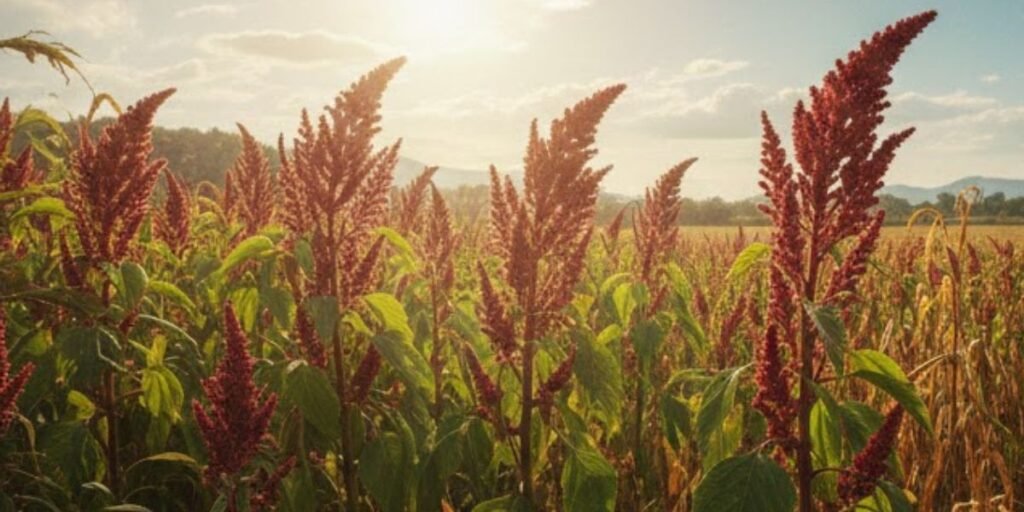
The word amaranth is derived from the Greek amarantos, meaning “the one that does not wither.” For 8,000 years, this plant has lived up to its name—surviving colonial extinction, thriving in drought-stricken soil, and evolving into a superweed that currently baffles modern industrial agriculture.
The Forbidden History: A Seed of Resistance
Before the 16th century, amaranth was a cornerstone of the Aztec Empire, equal in importance to maize and beans. It was more than food; it was a spiritual vessel. The Aztecs ground the seeds into a paste with honey and agave, molding them into large statues of the war god Huitzilopochtli. These statues were paraded through cities and then broken and eaten in a ceremony that mimicked religious communion.
Spanish Conquistadors viewed these rituals as a demonic parody of the Catholic Eucharist. To dismantle Aztec culture, they outlawed amaranth. Fields were burned, and those caught with the seeds faced severe penalties, including the amputation of hands. Indigenous farmers in remote mountain regions of Mexico and the Andes risked their lives to grow the plant in secret, passing down seed caches for generations until the plant was rediscovered by Western science in the 1970s.
Botanical Profile: The Pseudocereal
Amaranth is not a true cereal grain like wheat or rice; it is a pseudocereal—a seed that is used like a grain. It belongs to the Amaranthaceae family, making it a cousin to spinach, beets, and quinoa. There are dozens of species, ranging from grain amaranth harvested for tiny, protein-rich seeds to leaf amaranth known as Chinese spinach or callaloo.
There is also a wild, aggressive side to the plant. Amaranthus palmeri, or Palmer amaranth, has become the most feared weed in American agriculture. It has evolved a genetic resistance to common herbicides like Roundup, can grow three inches in a single day, and is capable of snapping the steel blades of harvest combines.
Nutritional Architecture and Health
Amaranth is widely considered a superfood because of its unique biological makeup. Unlike most grains, amaranth is a complete protein, containing all nine essential amino acids. It is particularly high in lysine, an amino acid missing in corn and wheat that is vital for tissue repair and calcium absorption.
Beyond protein, it contains double the iron of quinoa and is an exceptional source of manganese, magnesium, and phosphorus. It is also one of the few plant sources of squalene, a rare antioxidant oil usually sourced from shark livers. Studies suggest squalene can help lower bad LDL cholesterol and reduce inflammation. Because it is naturally free of gluten, it has become a high-protein staple for those with celiac disease.
Agricultural Resilience: The Crop of the Future
As climate change makes traditional staples harder to grow, amaranth is emerging as a global solution. It utilizes C4 photosynthesis, a highly efficient pathway that allows the plant to thrive in extreme heat and nitrogen-poor soil. When water is scarce, the plant can wilt voluntarily to stop water loss and then bounce back immediately after a single rainfall. It can produce viable seeds even after 40 days without rain, making it a future-proof crop for arid regions.
Global Culinary Legacy
Today, amaranth is a staple in diverse cultures across the globe. In Mexico, it is popped like popcorn and mixed with honey to make Alegria candies. In India, known as Rajgira (King Grain), it is a vital food during religious fasting periods when traditional grains are forbidden. In the Caribbean, the leaves are the soul of callaloo, a rich, spicy green stew, while in China and Southeast Asia, the leaves are steamed or stir-fried as a primary vegetable source.